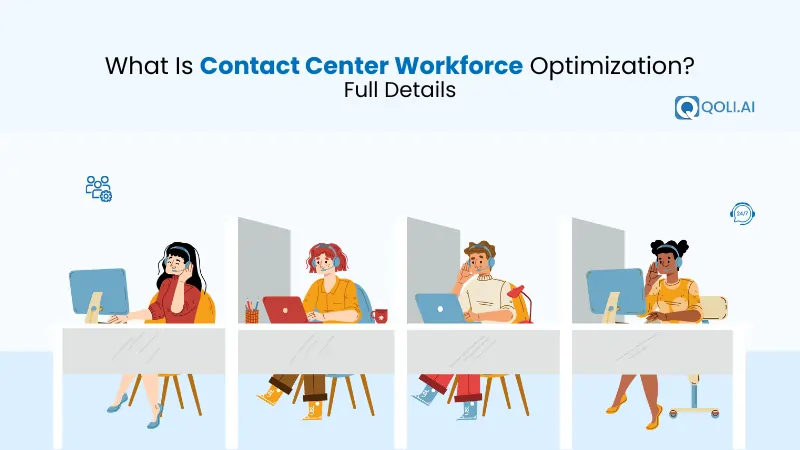
What Is Contact Center Workforce Optimization? Explained
Optimize your contact center with workforce optimization strategies, tools, and AI insights to boost efficiency, agent performance, and customer satisfaction.
Author: Aasrita Sai Abbaraju


Optimize your contact center with workforce optimization strategies, tools, and AI insights to boost efficiency, agent performance, and customer satisfaction.
Author: Aasrita Sai Abbaraju
As a content writer, I feel stressed when my work isn't organized. Deadlines keep coming, tasks get mixed up, and it's hard to know what to do first. The same problem happens in a contact center without proper workforce optimization. When an agent gets too much work and others too little, it becomes difficult for the contact center to stay organized.
In fact, the workforce optimization market has grown quickly, rising from $9.64 billion in 2024 to $10.9 billion in 2025, with a compound annual growth rate of 13%, showing how businesses are including WFO in their operations to improve efficiency and results.
In this blog, I will explain what workforce optimization(WFO) is, why it matters for contact centers, the common challenges, and practical strategies to help you manage your business.
Workforce optimization in contact centers is the process of organizing work so that every team member is doing the right tasks at the right time. Contact center WFO helps you see how many calls, chats, or emails your team can handle and makes it easier to manage daily work. Using the right WFO tools ensures the contact center runs smoothly, teams stay balanced, and customers get faster, better service.
Workforce optimization in contact center helps you manage in a smarter and more organized way. By planning tasks and schedules well it ensures both agents and customers get the best experience.
Here’s how workforce optimization can help your contact center:
Implementing workforce optimization helps contact center leaders plan effectively, improve team performance, and deliver better customer service.
Running a contact center well requires a balanced team, smooth customer interactions, and sales processes that lets everyone perform at their best. Workforce optimization focuses on three main areas to make this happen:
Think of workforce management as the backbone of your operations. It’s a set of processes that help you see what’s coming, plan your team’s schedule, and keep workloads balanced. For example:
Quality management is all about keeping customer interactions smooth and consistent. By reviewing calls, chats, and emails, you know what’s working and where agents might need support. The goal is to make customers feel valued while helping agents improve without feeling controlled.
Performance management focuses on how your agents are doing day-to-day. It looks at metrics like response times and workload handling, highlights what’s going well, and shows where extra guidance might help. It also keeps agents motivated and helps the team work more effectively together.
Contact centers handle hundreds of customer interactions every day, and even a small delay can affect customer trust. Contact center WFO helps businesses manage people, time, and resources in the smartest way possible.
Using WFO solutions for workforce planning makes it easier to plan work, reduce stress, and improve accuracy. Workforce optimization also helps businesses:
In short, workforce optimization matters because it keeps operations steady, improves the customer experience, and helps businesses run smoothly as they grow.
Workforce optimization (WFO) is more than just scheduling and managing agents. It includes features that help contact centers run efficiently. Here are the key features you should look for:
Together, these features help you work better, support agents, and give customers faster, smoother service through effective call center workforce optimization while improving agent performance and enhancing contact center operations.
Tip: Involve your agents in collecting feedback and include them in planning to empower the contact centre team and simplify workflows.
Workforce optimization (WFO) includes scheduling, workforce management (WFM), quality monitoring, interaction analysis, and performance tracking. In other words, WFM is one part of WFO, and WFO uses that foundation to make the whole contact center work smarter.
Let’s see how they differ:
| Aspect | Workforce Management (WFM) | Workforce Optimization (WFO) |
|---|---|---|
| Purpose | Make sure enough agents are available | Improve overall operations and efficiency |
| Focus | Scheduling and staffing | Quality, performance, and insights |
| Tools | Scheduling software, shift planners | Analytics dashboards, workforce optimization tools, quality monitoring, and reporting tools |
| Outcome | Smooth daily operations | Better service and smarter use of resources |
| Timeframe | Daily planning | Continuous improvement over time |
| Goal | Ensure tasks are covered | Make processes more effective and productive |
| Scope | Focused on individual shifts | Covers entire contact center operations |
Workforce optimization (WFO) helps contact centers run efficiently, but it comes with several challenges. Here are the most common issues teams face:
Creating a strong call center optimization strategy ensures your contact center can handle call volume, respond to customer demands, and maintain smooth operations. A good strategy focuses on four main areas: setting clear goals, using the right tools, involving your agents, and continuously reviewing and improving your processes.
Start by deciding what you want to achieve with your workforce optimization. Clear goals help everyone understand the purpose of WFO and measure success. Goals could include:
Choosing the right tools is key to effective workforce optimization. The right software keeps your contact center organized, monitors performance, and provides actionable insights. Some essential sales tools include:
Solutions like Qoli combine call management, call recording, and analytics to support workforce optimization by capturing performance data. Managers can monitor real-time performance, track key performance indicators, understand trends, and make informed decisions quickly. This ensures smoother workflows and helps deliver consistent customer service.
Your agents are the backbone of your contact center, so involving them in the process is crucial. Listening to their feedback helps improve their experience and boosts engagement. Key steps include:
Workforce optimization is not a one-time task. Regularly reviewing your processes and making improvements ensures your contact center adapts to changing customer needs and business goals. Steps to follow:
By following these four steps, your contact center can operate more efficiently, support your agents effectively, and provide a better experience for every customer.
Contact center workforce optimization combines all components of the workforce optimization to streamline operations. From center workforce management to handling omnichannel contact, it ensures that teams can manage customer issues efficiently while delivering consistent customer support.
An effective WFO approach enables contact centers to implement a strong WFM strategy, continuously update training, and create processes that empower contact agents. This results in a better-managed contact center where agents feel supported, and every customer receives timely, high-quality service.