What Are DTMF Tones? Definition & How They Work
DTMF (Dual-Tone Multi-Frequency) tones are keypad sounds used in IVR systems, call centres, banking, and automated menus for accurate input signals.
Author: Sujith Grandhi


DTMF (Dual-Tone Multi-Frequency) tones are keypad sounds used in IVR systems, call centres, banking, and automated menus for accurate input signals.
Author: Sujith Grandhi
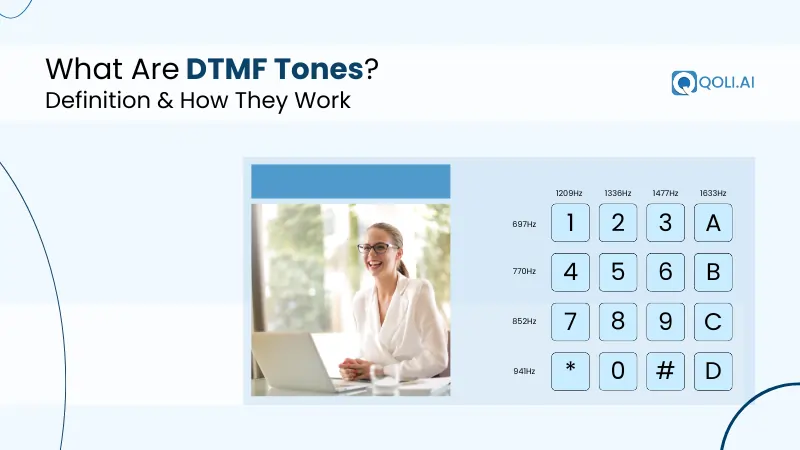
DTMF stands for Dual-Tone Multi-Frequency. DTMF is a signalling method where each phone keypad press sends two sound frequencies that systems use to identify the key you pressed.
DTMF (Dual-Tone Multi-Frequency) tones are the sounds generated when you press a key on a phone. Each number or symbol produces a unique pair of tones, one high frequency and one low frequency, that the system can recognise.
These tones are mainly used by IVR (Interactive Voice Response) systems to understand your inputs. For example, when you enter your account number or choose a menu option, the IVR detects the DTMF tones and performs the corresponding action, all without human intervention.
In simple terms, DTMF (and its alias DTMS) turns your keypad into a communication tool, not just a set of numbers. It’s the system behind “Touch-Tone” dialing that replaced the old pulse dialing method.
Each key on your phone sends out two specific frequencies at the same time, one low and one high. These two frequencies combine into a unique tone that tells the system exactly which key you pressed.
Here’s how it works step by step:
Basically, every tap on your keypad is your phone “speaking” in a secret, super-efficient tone code.
DTMF plays a key role in multiple phone operations, such as:
Without DTMF, modern telephony and automated systems wouldn’t work efficiently. They allow phones to:
DTMF makes phones smarter, your keypad isn’t just for dialing numbers, it’s a tool for communication and control.