Direct Inward Dialing: What It Is & How It Works
DID stands for Direct Inward Dialing. It is a telecom feature that routes external calls directly to specific internal extensions without needing a receptionist.
Author: Umar Syed


DID stands for Direct Inward Dialing. It is a telecom feature that routes external calls directly to specific internal extensions without needing a receptionist.
Author: Umar Syed
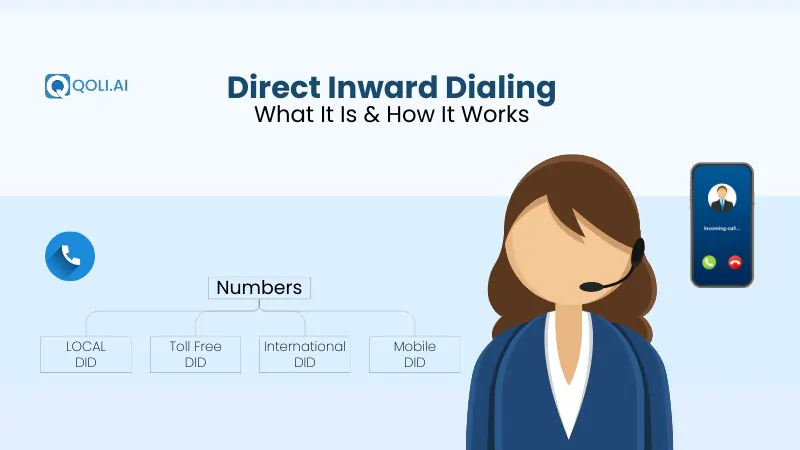
Direct Inward Dialing is a service that lets your business assign individual phone numbers to people or teams inside your organisation. When someone dials that number, the call goes directly to the person who owns it.
There is no need for the caller to go through a main line or wait for someone to transfer the call. It is simply a direct route that connects callers to the right person from the very beginning.
Direct Inward Dialing follows a simple flow. When a caller dials a number, the service provider checks where that number should go and sends the call to the right extension.
This is what happens in the DID process:
You’ll find different kinds of DID numbers, and each one makes it easier for people to reach the right place. The type you choose usually depends on where your callers are and the way you want them to contact your business.
Direct Inward Dialing is used in many places where quick and direct communication matters. It helps teams handle calls without confusion and makes it easier for people to contact the right person.
Common places where DID is used:
Let’s say you run a small company where each employee handles different tasks. Instead of giving everyone one shared office number, you assign a separate number to each person. When someone calls those numbers, the call reaches the exact person instantly.
For example:
The caller reaches the right person without waiting for a transfer. This keeps the process simple for the caller and easy for your team to manage.